In an opticians, where you place a display matters as much as the display itself. The window —which catches the passer-by— is a world apart from the prescription wall where the customer compares frames, or the sun zone with its seasonal rotation. Each zone calls for a different format, and getting it right is the difference between a POS display that invites people to try and one that just takes up space.
We go through the POS display types most used in the eyewear channel and the zone where each one performs. At Atamark we have spent more than 14 years manufacturing POS displays for opticians and eyewear brands from Parets del Vallès.
📖 If you’re new here, start with the base guide: POS displays for opticians: 2026 guide →
1. Window display: the first salesperson
The window is an opticians’ biggest draw: most visits start with a frame spotted from the street. A good window display highlights one or a few pieces with individual stands, lighting and clear campaign graphics. Less is more: a cluttered window says nothing. It is the format of seasonality —sun in spring-summer, a new collection at every change— and the one that sets the store’s positioning before anyone walks in.
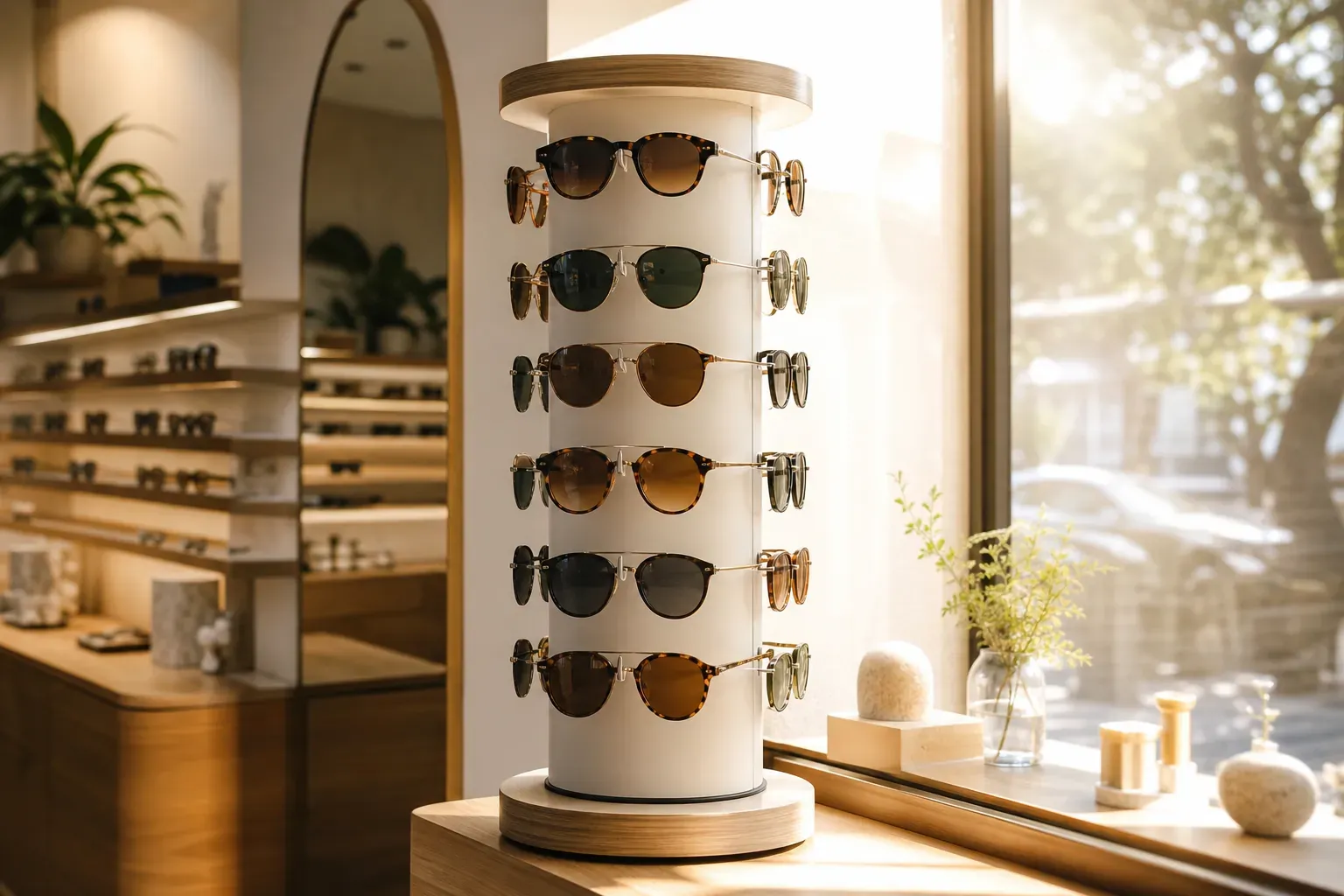
2. Rotating sunglasses tower
The workhorse of the sun season. A vertical, rotating structure that holds plenty of product in a very small footprint, letting the customer turn it, look and pick up with ease. It goes in a walkway or near the entrance, where impulse is at its peak. The key is eye-level height, lighting and making it easy to try on: with sun, trying on is buying.
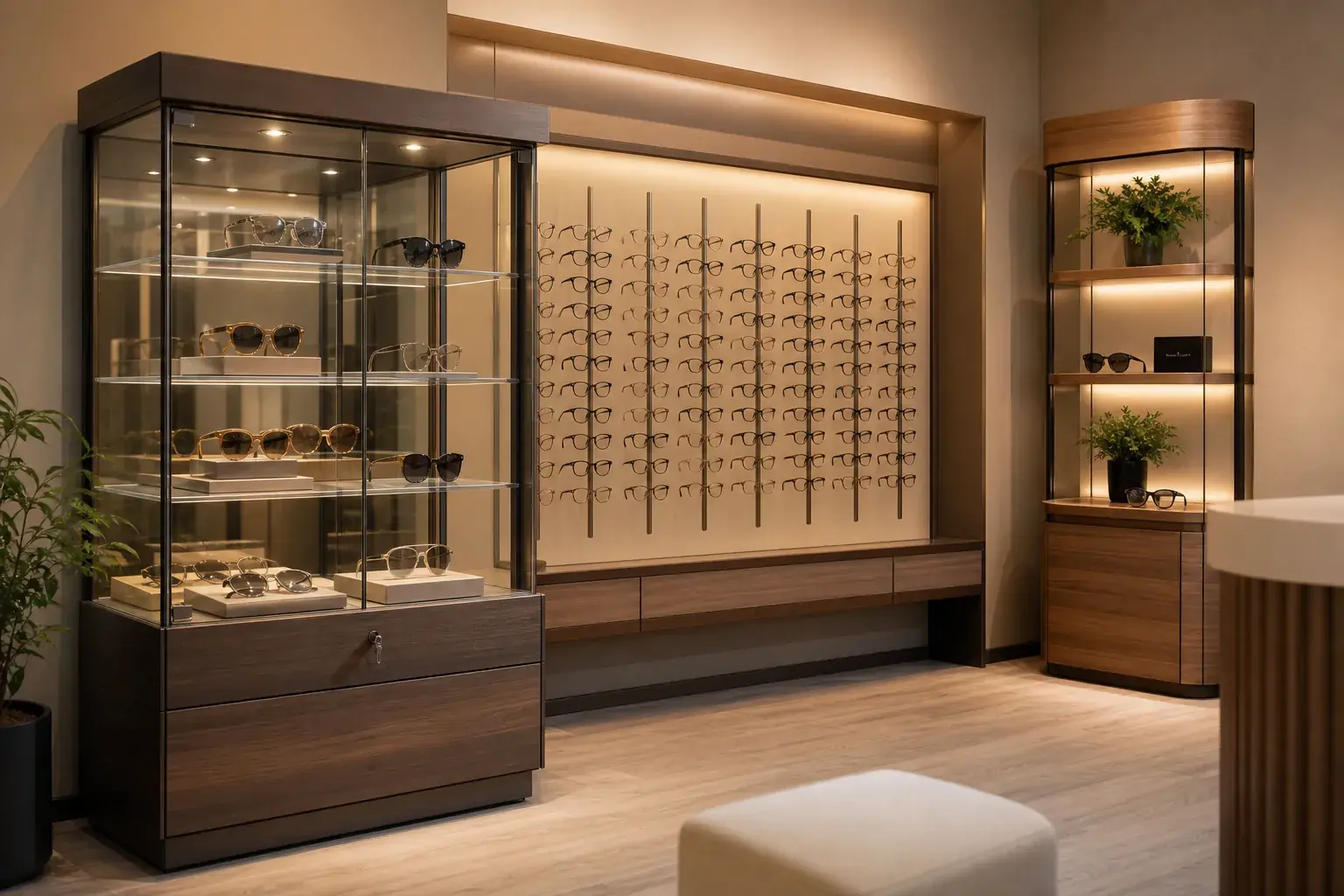
3. Lockable cabinet: for high value
For premium frames and designer sunglasses, where the unit value and the risk of theft call for protection. The lockable cabinet keeps visibility —the customer sees and desires— but controls access. The design challenge is that it shouldn’t feel like a safe: good lighting and well-presented product so it keeps inviting rather than intimidating.
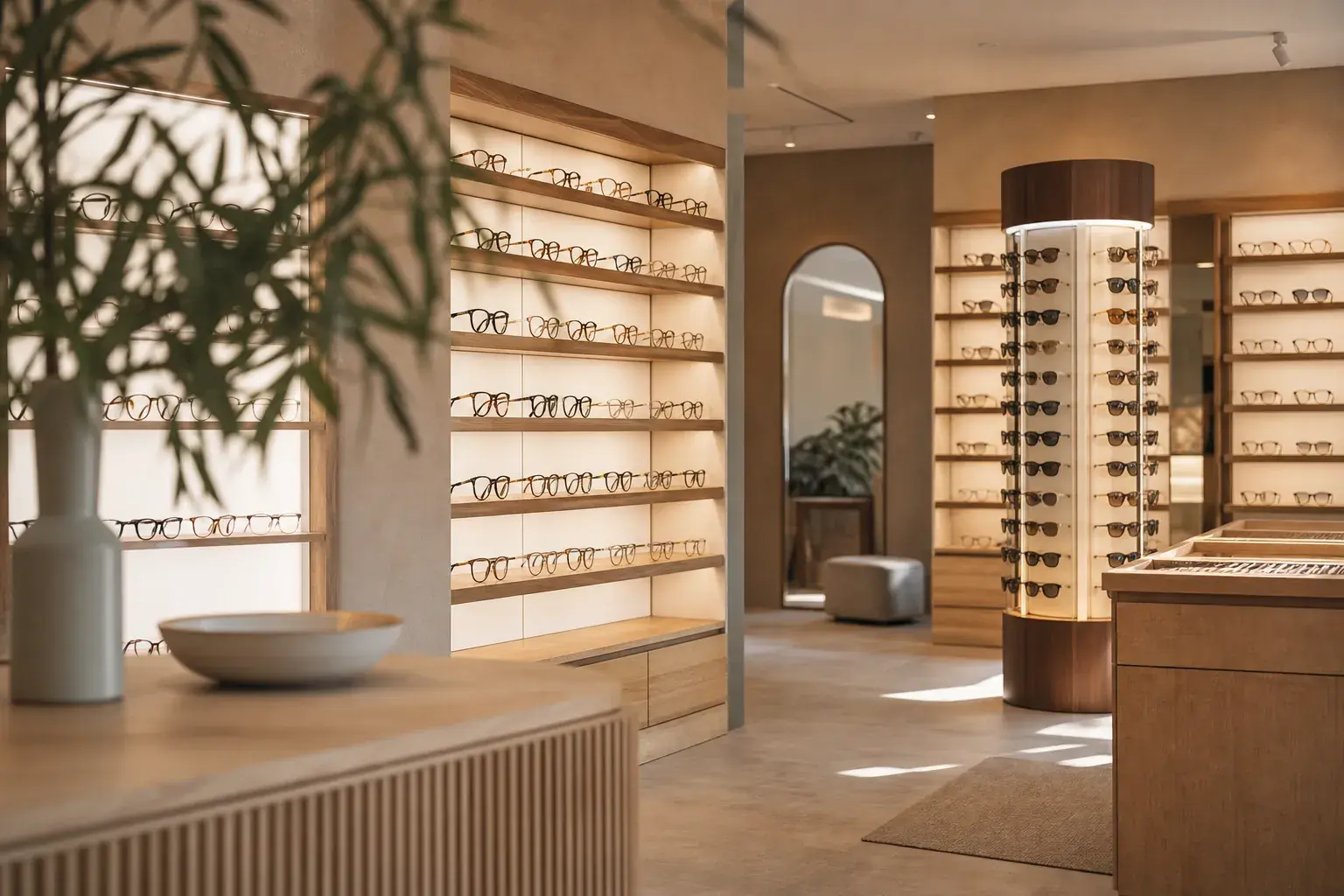
4. Wall panel and prescription display
The format for organising the collection of prescription frames. Wall panels or units with rods and stands that let you display many references clearly, by families, brands or ranges. Here order and accessibility rule: the customer has to be able to compare and try on without asking for help with every frame. The visual hierarchy guides the purchase.
5. Brand unit or corner
A label’s territory inside the opticians. A dedicated unit, with its own lighting, graphics and brand language, that lifts the perception of the whole store and sets the opticians apart from the chain next door. It is the way eyewear brands stay present at the point of sale with coherence, rather than dissolving into a generic shelf.
6. Counter and accessories display
The one that grows the basket at the close of the sale. On the counter, next to the till: cleaning solutions, cases, cords, sprays and the second pair. It is the opticians’ cross-sell, the small impulse that adds on once the customer has already decided. Low cost, high effect when it is restocked.
Table: which display for each zone
| Type | Zone | Best for |
|---|---|---|
| Window display | Window | Drawing in, campaign, positioning |
| Rotating tower | Entrance / walkway | Sunglasses, seasonal rotation |
| Lockable cabinet | Sun / premium prescription | High value, anti-theft |
| Prescription wall panel | Prescription wall | Organising the collection, comparing |
| Brand corner | Featured zone | Label presence, desire |
| Counter / accessories | Till / closing | Cross-selling, second pair |
☀️ The most seasonal product calls for its own rules: Sunglasses displays: season, rotation and security →
How to choose
- Catch the passer-by on the street → window display.
- Turn over plenty of sun product in season → rotating tower.
- Protect high-value frames → lockable cabinet.
- Organise the prescription collection → wall panel.
- Give a brand its territory → brand corner.
And if your brand keeps a presence across many opticians campaign after campaign, consider a modular and reusable format: the structure stays and you only change the graphics and the product each season.
📖 Reusable and modular POS displays: how to cut waste in campaigns →
Frequently asked questions
Which display sells the most sunglasses in an opticians?
A well-lit rotating tower at eye level, because it concentrates plenty of product in little space and makes trying on easy, which with sunglasses is the key step towards the purchase. For high-value designer pieces, it is combined with a lockable cabinet.
How is a collection of prescription frames displayed?
With wall panels or prescription units that organise the references by brand, family or range, prioritising order and accessibility so the customer can compare and try on independently. The visual hierarchy guides them towards the ranges you want to push.
Can an eyewear brand have its own space in the opticians?
Yes, through a brand unit or corner with its own lighting and graphics. It is the way to give a label a coherent presence inside the store and set it apart from the generic shelf, something especially valuable for a desire-driven product like eyewear.
Which display does your opticians or your brand need?
At Atamark we design and manufacture all of these formats for the eyewear channel in Parets del Vallès, with FSC and PEFC chain of custody and a modular option. Tell us the zone, the product and the objective and we’ll propose the format that performs best, with you from the sketch to the installation.
→ Ask us for a quote · See POS display solutions for opticians · Guide to POS displays for opticians